
Charakusa valley and K6/K7 Base Camp
Overview
A fifteen-day trek from Hushe into the Charakusa valley, to the base camps of K6 and K7 and the granite that has drawn alpinists here for thirty years. Shorter and far quieter than the Baltoro, and the best walking in the Hushe region.
One valley, two names
K6 and K7 stand in the Charakusa. Operators sell “K6/K7 Base Camp” and “Charakusa Valley” as separate treks and they are the same walk, which is worth knowing before you compare itineraries. We sell it once.
The meadow
The base camp meadow at the head of the valley is the reason climbers keep coming back: flat grass, running water, and walls on three sides. Nayser Brakk, Farol, Beatrice and the Changi towers are all within sight of the tents, and K6 and K7 close the valley. It is the kind of place that makes people revise what they thought a base camp was.
The walking
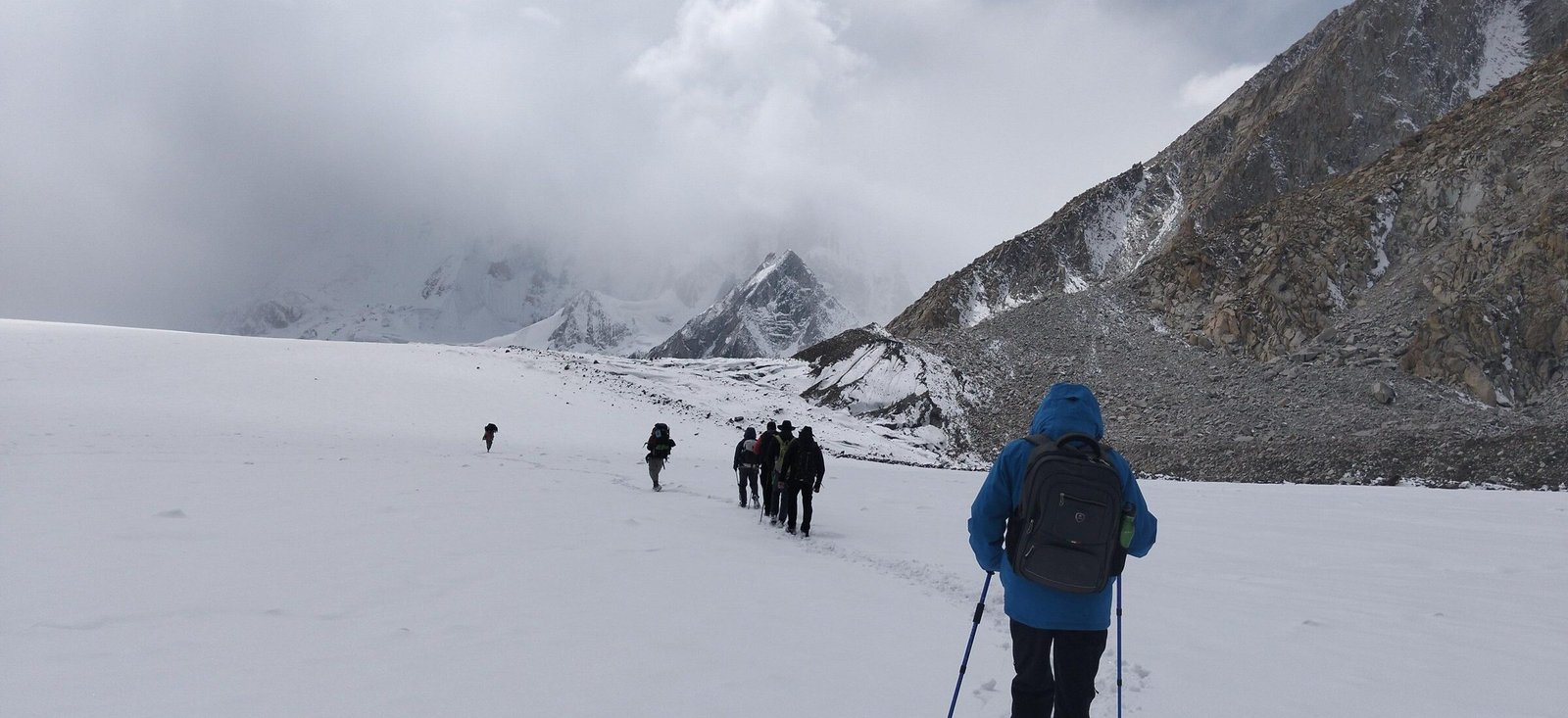
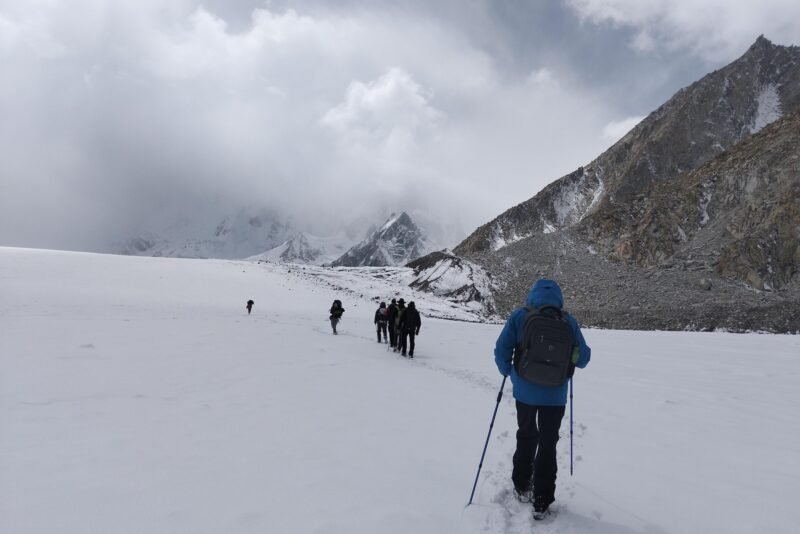
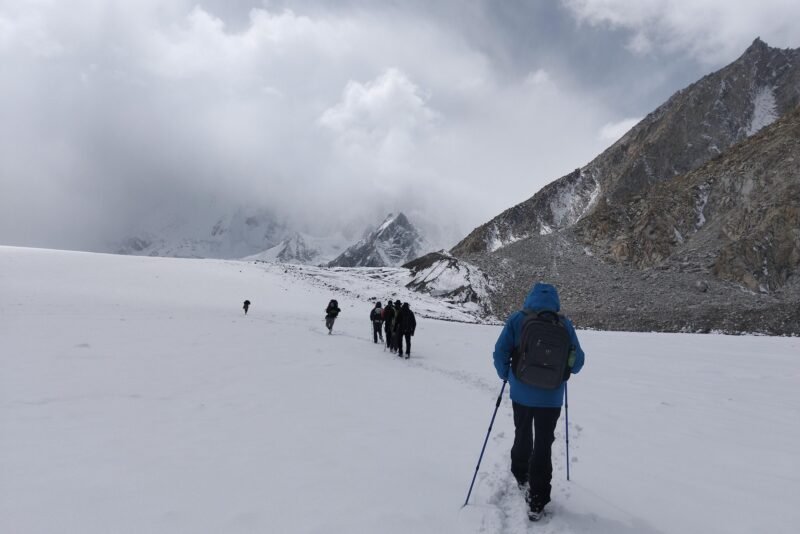
From Hushe it is up the Charakusa glacier and its ablation valley — rough, loose underfoot, and a steady climb rather than a steep one. Five to seven hours on the longer days. There is no technical ground and no rope on the trek itself, though the glacier sections ask for care and we brief them properly.
When it runs
June to September, with July and August the most settled. The Hushe valley sits lower than the Baltoro approach, so the season opens a little earlier and the walk in is greener.
What is inside the price
Permits and fees, jeeps and drivers on our own plates from Skardu through Khaplu to Hushe, full camp with cook and mess, a Hushe porter crew from the village under our published porter charter with loads weighed in front of you, guides on our payroll, satellite comms above the village and a written evacuation plan for every camp. Masherbrum Base Camp is the neighbouring valley and Nangma is the gentler one. See the rest of Hushe and the Charakusa and our other Karakoram treks.
- Duration
- 12 – 15 days
- Trek days
- 7
- Maximum altitude
- 4,800 m [confirm]
- Grade
- Hard
- Group size
- Max 10
- Guides
- 2 certified, 1 WFR
- Season
- June – September
- Starts / ends
- Islamabad / Islamabad
- Accommodation
- Hotels either side, full camp in the valley
- K6 and K7 closing the head of the valley, seen from the tents
- A base-camp meadow alpinists rate among the finest in the Karakoram
- Nayser Brakk, Farol, Beatrice and the Changi towers all within sight of camp
- Far quieter than the Baltoro, and a week shorter
- A Hushe porter crew from the village, under our published charter
Private departures and group pricing
Your party, your dates. The per-person figure falls as the party grows, because the guides, the vehicles and the camp cost the same split more ways. Everything in the inclusions list applies, and the safety standard is the one published above.
| Party size | Price per person | Notes |
|---|---|---|
| 2 | USD 3,300 | A full crew for two people |
| 3 – 4 | USD 2,800 | |
| 5 – 8 | USD 2,300 | Second guide joins at six |
Deposit is 25% of the trip price. The payment schedule and the cancellation terms are published and sent with every quote, before you pay anything.
Day by day
Buffer days are built in, not padding. If the weather takes them, nothing downstream collapses and you are not charged twice.
01 Arrive Islamabad Hotel · 540 m
Met inside the terminal. Briefing, SIM and cash.
02 Islamabad to Skardu Hotel · 2,230 m
By air when the weather allows. Buffer held if not.
03 Skardu — permits and kit check Hotel · 2,230 m
Paperwork, loads weighed, kit inspection.
04 Skardu to Hushe Camp
Through Khaplu and up the Hushe valley by jeep. Crew and loads meet us at the village.
05 Hushe to Spangsar Camp
Out of the village and up the valley. A short first day on purpose.
06 Spangsar to Charakusa Base Camp Camp
Onto the Charakusa glacier and up to the meadow at its head.
07 At Charakusa — K7 Base Camp Camp
Up to the K7 side of the valley and back. Granite on three sides all day.
08 At Charakusa — K6 Base Camp Camp
The other arm of the valley, under K6. The highest ground of the trek.
09 Rest day at the meadow Camp
Held for weather. If the weather is good it is yours for the walking you choose.
10 Charakusa to Spangsar Camp
Back down the glacier, quicker and harder on the knees.
11 Spangsar to Hushe Camp
Out to the village. Crew settlement and the end of the walking.
12 Hushe to Skardu Hotel · 2,230 m
Back down the valley by jeep. Kit return and debrief.
13 Skardu — buffer day Hotel · 2,230 m
Held against the flight. Yours if it is not needed.
14 Skardu to Islamabad Hotel · 540 m
By air if the weather allows, by road if not.
15 Islamabad, and home —
Airport transfer.
What is included
- Visa sponsor letter
- All permits, park fees and NOCs
- Met inside the terminal, all transfers
- Our own 4x4s and drivers
- Certified guides and insured crew
- Camp equipment, cook and all meals on trek
- Porter crew under our published charter, loads weighed
- Medical kit, oxygen where the route calls for it
- Satellite comms and a daily message home
- International flights
- Visa fee itself
- Travel insurance covering evacuation and repatriation
- Personal equipment
- Tips
If our price is wrong for you we will move you to a lower tier or remove a named inclusion. We do not discount a published price, and we do not cut the crew.
Fitness and difficulty — read this honestly
Seven walking days, five to seven hours on the longer ones, on rough and loose ground that climbs steadily rather than steeply. You need to be able to repeat that on consecutive days with a daypack.
No technical ground and no rope on the trek, but the glacier sections are uneven and there is loose moraine where a slip would matter. This is a step up from Rakaposhi Base Camp and a step down from the Baltoro: a reasonable second Karakoram trek, and a poor first one. If it would be your first, say so and we will tell you honestly whether to start somewhere shorter.
Kit list
The full list with quantities is sent with your quote. Rental is available in Skardu for most of it, priced separately. Your kit is checked item by item in Islamabad, not the night before the trek.
Group — we provide
- Sleeping, mess, kitchen and toilet tents
- Group first aid and the medical kit
- Satellite phone and messenger
- All cooking and camp equipment
Personal — yours
- Sleeping bag rated to −15 °C or better
- Insulated jacket and waterproof shell
- Walking boots, worn in before you arrive
- Trekking poles
- Sun hat, glacier glasses and high-factor sunscreen
- Headtorch with spare batteries
- Water bottles or bladder, two litres minimum
- Personal medication and a declared medical history
Safety, evacuation and insurance
Helicopter rescue in the Karakoram is not guaranteed. Weather, altitude, daylight and clearance all decide whether a helicopter flies, so every stage carries a named drive-out or walk-out plan. Your insurance must cover helicopter evacuation and repatriation to the maximum altitude on your itinerary, and we verify the certificate before the trip starts.
A graded medical kit sized to the trip, oxygen, a portable altitude chamber, a satellite phone and a messenger, and a wilderness first responder in the crew.
The lead guide’s decision to turn back is final. Not a guest, not an agent, not this office — whatever has been paid.
Getting there
Islamabad
Met inside the terminal. Briefing the same evening, SIM and cash sorted.
Islamabad to Skardu
By air when the weather allows, or by road when it does not. A buffer day either way.
Skardu to Hushe
Six to seven hours by jeep through Khaplu and up the Hushe valley, on our own vehicles.
From Hushe
On foot, with a Hushe porter crew from the village.
Questions people actually ask
Is the Charakusa trek the same as K6/K7 Base Camp?
Yes. K6 and K7 stand in the Charakusa valley, so the two names describe the same walk. Operators sell them as separate treks, which is worth knowing when you compare itineraries.
How many days does it take?
Fifteen door to door, of which seven are walking. The trekking itself is about five days plus two at the meadow; the rest is Skardu, the jeep in, and a buffer day against the flight.
How fit do I need to be?
Five to seven hours a day on rough, loose ground, on consecutive days, with a daypack. A step up from Rakaposhi Base Camp and a step down from the Baltoro.
How high does it get?
Around 4,800 m at the upper base camps, which we are still confirming against a second source and which prints with a marker until we have. Altitude is a real consideration here but it is not the main difficulty; the ground is.
Do I need a permit for the Charakusa?
Hushe is an open trekking zone, so there is no restricted-zone permit and no liaison officer. There are trekking and local fees, which we pay as part of the trip. Your Pakistan visa is the paperwork that matters and we send a sponsor letter for it.
What does it cost and what moves the price?
Party size first, because camp, crew and a cook cost nearly the same for three people as for eight. Then porter stages, which the route fixes. It is markedly cheaper than any Baltoro trek because the approach is shorter. Deposit is 25 per cent.
When is the best time to go?
July and August are the most settled. The Hushe valley is lower than the Baltoro approach, so the season opens a little earlier and the walk in is greener in June.
Can climbers use this as a base?
Yes, and many do. If you are coming to climb rather than walk, tell us at enquiry — the permits, the stay and the crew are all different, and it is a far better trip planned that way from the start.
If this one is not quite right
The commonest reason a trip is wrong is that it is too hard or too easy, not that it is in the wrong place.
- A step easier Rush Lake and Rush Pari
- A step harder Four 8,000 m base camps
You have already chosen the region, which is the harder decision. These run from the same roadhead.
- Hushe & Charakusa · Expedition Gondogoro Peak expedition
- Hushe & Charakusa · Expedition Laila Peak expedition
- Hushe & Charakusa · Expedition Hushe valley first ascent — unnamed 6,000 m objectives