
Spantik — the Golden Peak
Overview
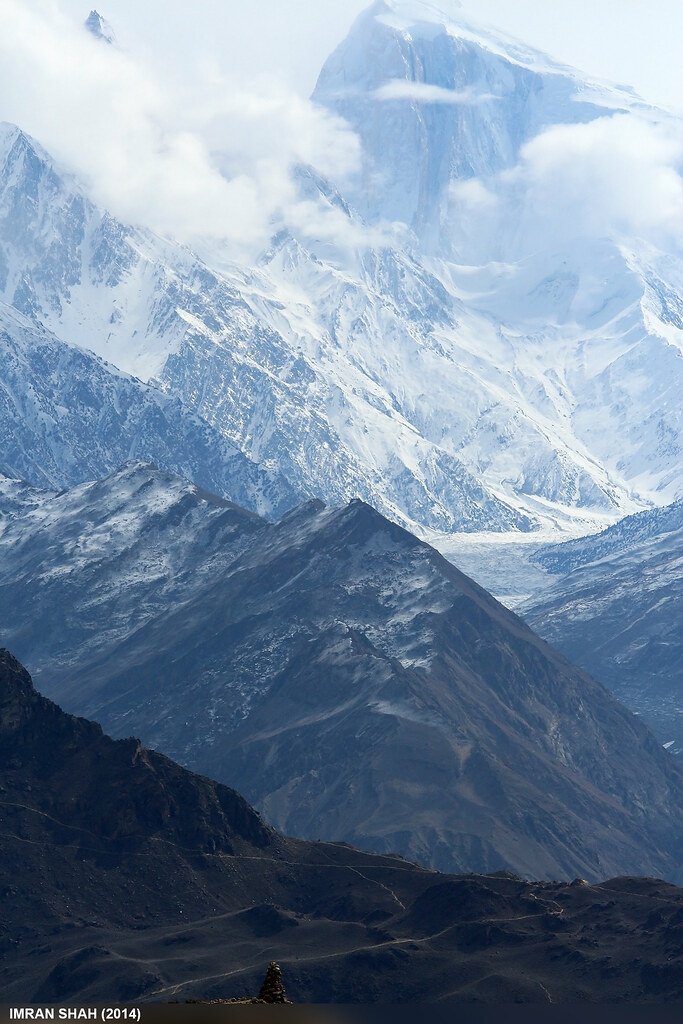
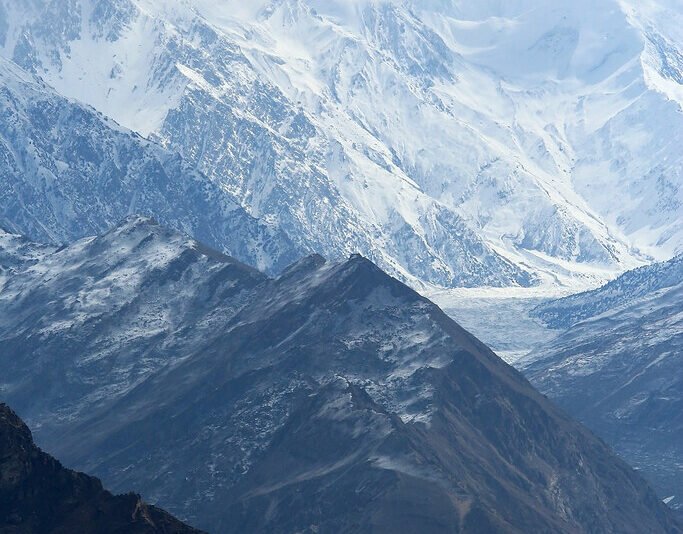
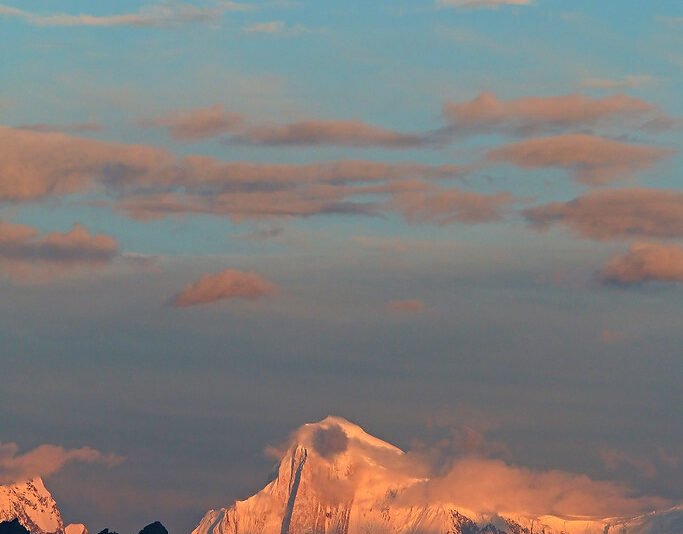
Spantik — the Golden Peak — is a 7,027 m mountain in Nagar climbed by its south-east ridge, and the best first seven-thousander in Pakistan. Twenty-six days, graded very hard, no technical crux on the standard route. If you want to find out whether you climb well above 6,500 m, this is the mountain to find out on.
Why Spantik is the standard stepping stone
The south-east ridge is a long snow route. There is glacier travel, crevasse risk, altitude and weather, but there is no rock step, no icefall to thread and no section that demands technical climbing beyond competent cramponing and rope work. What it demands is the ability to keep going on a long summit day at 7,000 m — which is exactly the question a climber needs answered before booking an eight-thousander.
You approach from Arandu through the Chogolungma glacier to base camp at around 4,500 m, then build through Camps 1, 2 and 3 on the ridge. Summit day is long and begins in the dark.
The Golden Pillar, and what we do not sell
Spantik’s north-west face carries the Golden Pillar, one of the most celebrated hard climbs in the range. We do not guide it and we do not pretend to. We run the south-east ridge, properly, and we say which one you are buying.
Who we take
A 6,000 m summit, or solid alpine experience with glacier travel and crampon competence, plus references. No 7,000 m experience needed — that is the point of the trip. We will talk through your record at enquiry and tell you honestly whether this is your year for it.
When it runs
June to August. The Chogolungma approach and the ridge both want settled summer conditions, and we build weather days into the rotation rather than fixing a summit date.
What is inside the price
Peak royalty and permits, the trekking visa file, all transport on our own vehicles to Arandu, the approach under our published porter charter, base camp with cook and mess, route rope and hardware placed by our crew, one high-altitude guide per two climbers, oxygen held for emergency use, satellite comms and a written evacuation plan for every camp on the ridge.
- Duration
- 24 – 28 days
- Maximum altitude
- 7,027 m
- Grade
- Hard
- Group size
- Max 10
- Guides
- 2 certified, 1 WFR
- Season
- June – August
- Starts / ends
- Islamabad / Islamabad
- A first 7,000 m with a real summit day and no technical crux.
Fixed departures
These prices are per person on a fixed departure, and they are the price — we do not discount a published figure. Deposit is 25%; the payment schedule and cancellation terms are published and sent with every quote. For your own dates, see the private pricing below.
Private departures and group pricing
Your party, your dates. The per-person figure falls as the party grows, because the guides, the vehicles and the camp cost the same split more ways. Everything in the inclusions list applies, and the safety standard is the one published above.
| Party size | Price per person | Notes |
|---|---|---|
| 2 | [PRICE] | Private guide and vehicle for the two of you |
| 3 – 4 | [PRICE] | |
| 5 – 8 | [PRICE] | Second guide joins at six |
| 9 – 12 | [PRICE] | By arrangement, season permitting |
Deposit is 25% of the trip price. The payment schedule and the cancellation terms are published and sent with every quote, before you pay anything.
Day by day
Buffer days are built in, not padding. If the weather takes them, nothing downstream collapses and you are not charged twice.
01 Arrive Islamabad Hotel · 540 m
Met inside the terminal. Briefing and gear check.
02 Islamabad to Hunza or Nagar Hotel
Air to Gilgit and road, or the Karakoram Highway.
03 To Arandu Camp
Jeep to the roadhead. Crew and loads organised.
04 Arandu to Chogolungma Camp
Onto the glacier.
05 To Bolocho Camp
Up the glacier, ablation valley where it exists.
06 Bolocho to base camp Base camp · 4,500 m
Camp built below the southeast ridge.
07 Base camp — rest and rope practice Base camp · 4,500 m
Acclimatisation and skills, every member.
08 Rotation one — Camp 1 Base camp · 4,500 m
Up the ridge and back to sleep low.
09 Rest Base camp · 4,500 m
Recovery, pulse and saturation recorded.
10 Rotation two — Camp 2 with a night out Base camp · 4,500 m
Higher, sleeping on the mountain.
11 Rest and weather window Base camp · 4,500 m
Waiting.
12 Summit push — Camp 1 Camp 1
Push begins. Turn-back criteria restated.
13 Push — Camp 2 Camp 2
Short night.
14 Summit day, or turn back Camp 2
The long upper ridge. It goes further than it looks.
15 Descent to base camp Base camp · 4,500 m
Off the mountain.
16 Weather reserve Base camp · 4,500 m
Held for a second attempt.
17 Base camp to Bolocho Camp
Loads lighter.
18 Bolocho to Arandu Camp
Off the glacier.
19 Arandu to Hunza or Gilgit Hotel
Out by jeep. Kit return and debrief.
20 To Islamabad Hotel · 540 m
Air or road, with buffer.
21 Islamabad, and home —
Airport transfer.
What is included
- Visa sponsor letter
- All permits, park fees and NOCs
- Met inside the terminal, all transfers
- Our own 4x4s and drivers
- Certified guides and insured crew
- Camp equipment, cook and all meals on trek
- Medical kit, oxygen where the route calls for it
- Satellite comms and a daily message home
- International flights
- Visa fee itself
- Travel insurance covering evacuation and repatriation
- Personal equipment
- Tips
If our price is wrong for you we will move you to a lower tier or remove a named inclusion. We do not discount a published price, and we do not cut the crew.
Fitness and difficulty — read this honestly
[WRITE THE HONEST FITNESS NOTE FOR THIS ROUTE BEFORE PUBLISHING.]
Kit list
The full list with quantities is sent with your quote. Rental is available in Skardu for most of it, priced separately. Your kit is checked item by item in Islamabad, not the night before the trek.
Group — we provide
- Sleeping, mess, kitchen and toilet tents
- Group first aid and the medical kit
- Satellite phone and messenger
- All cooking and camp equipment
Personal — yours
- Sleeping bag rated to −20 °C or better
- Insulated jacket and waterproof shell
- Walking boots, worn in before you arrive
- Trekking poles
- Sun hat, glacier glasses and high-factor sunscreen
- Headtorch with spare batteries
- Water bottles or bladder, two litres minimum
- Personal medication and a declared medical history
Technical — yours, rentable in Skardu with notice
- Mountaineering boots, crampon-compatible
- Crampons and ice axe
- Harness, belay device, two locking carabiners, prusik
- Helmet
Safety, evacuation and insurance
Helicopter rescue in the Karakoram is not guaranteed. Weather, altitude, daylight and clearance all decide whether a helicopter flies, so every stage carries a named drive-out or walk-out plan. Your insurance must cover helicopter evacuation and repatriation to the maximum altitude on your itinerary, and we verify the certificate before the trip starts.
A graded medical kit sized to the trip, oxygen, a portable altitude chamber, a satellite phone and a messenger, and a wilderness first responder in the crew.
The lead guide’s decision to turn back is final. Not a guest, not an agent, not this office — whatever has been paid.
Getting there
Islamabad
Met inside the terminal. Briefing the same evening, SIM and cash sorted.
Islamabad to Gilgit or Hunza
By air to Gilgit, weather permitting, or by road up the Karakoram Highway. The road is long but reliable and it is scenery rather than dead time.
On the ground
Our own vehicles and drivers throughout.
Questions people actually ask
Is Spantik a good first 7,000 m peak?
It is the one most often used for that and we think it is a sound choice. Not technically hard on the standard ridge, long enough to teach you what altitude does, and with a real summit at the end.
What experience do I need?
Above 6,000 m, competent in crampons on snow with a rope, and able to carry at altitude on consecutive days. We check it rather than take your word.
What is the Golden Pillar?
The northwest face — one of the hardest lines in the Karakoram and almost never climbed. You will see it from the approach. We do not run it.
How long is summit day?
Long. The upper ridge goes considerably further than it looks from below, which is the single most common surprise on this mountain and the reason the turn-back time is set early.
Do you use supplementary oxygen?
Not on the climb at this altitude. We carry oxygen at base camp for medical use, with a portable altitude chamber.
What happens if I cannot continue?
Someone qualified goes down with you — that is what the ratio is for — and the expedition continues.
Can it be combined with a trek?
Yes, and it works well with the Nagar and Hunza valleys either side. Tell us how long you have.
If this one is not quite right
The commonest reason a trip is wrong is that it is too hard or too easy, not that it is in the wrong place.
- A step harder Broad Peak expedition
You have already chosen the region, which is the harder decision. These run from the same roadhead.
- Hunza & Gojal · Trek Rush Lake and Rakaposhi Base Camp
- Hunza & Gojal · Jeep safari Karakoram Highway and Hunza
- Hunza & Gojal · Cultural journey Hunza and Baltit with the blossom
If this one is not right
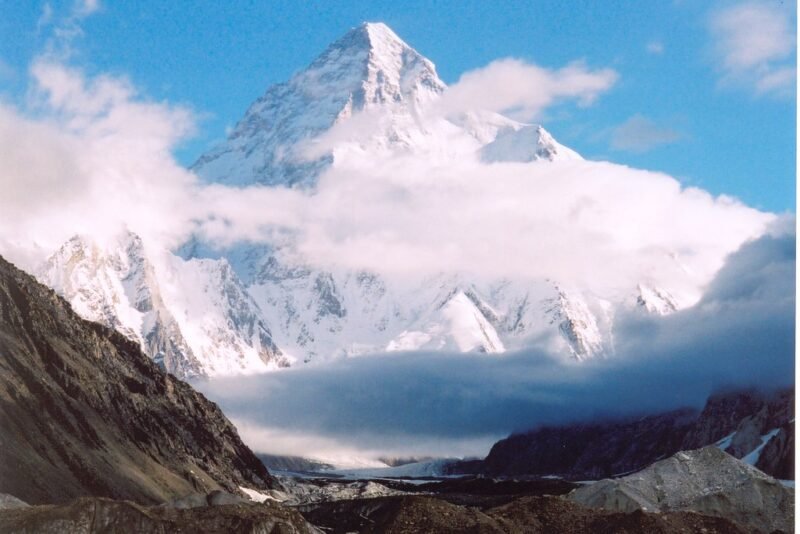 Extreme
Baltoro & Concordia · Expedition
Extreme
Baltoro & Concordia · Expedition
K2 expedition, south-east ridge
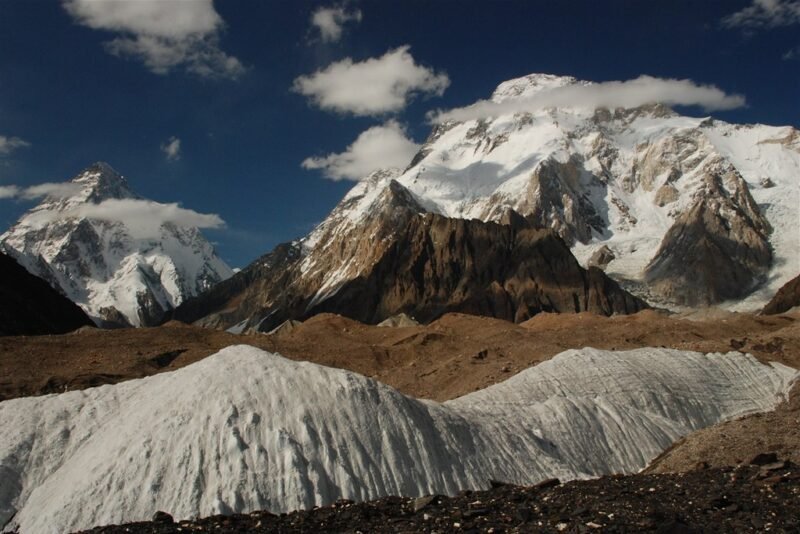 Very hard
Baltoro & Concordia · Expedition
Very hard
Baltoro & Concordia · Expedition
Broad Peak expedition
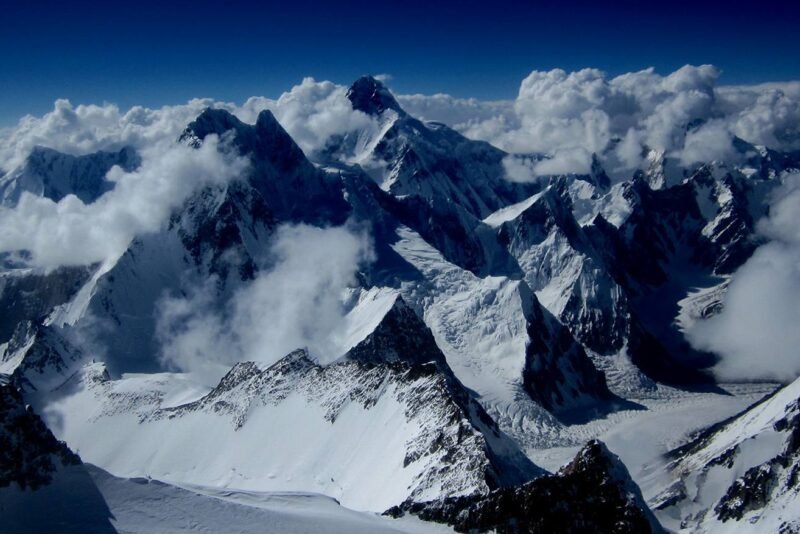 Very hard
Baltoro & Concordia · Expedition
Very hard
Baltoro & Concordia · Expedition
Gasherbrum II expedition
 Extreme
Nanga Parbat · Expedition
Extreme
Nanga Parbat · Expedition